-
Selected Cards
No cards have been selected
remove all the cards
Start by checking off the cards that you want.
.(printing HOWTO)
Latest Deck

(Other decks)
Phylo in plain english.
Describe Phylo.
I want to get cards.
I want to submit art.
How to play?
Origin Story.
Add my 2 cents.
Terms of use/copyright?
Phylo to do list
Need more images.
Card back design.
Lackey CCG | MSE
Mobile App?
Create new rules.
School cards widget.- Phylo (or if you rather use our preferred term of endearment, Phylomon), is many things. It is:
1. A card game that makes use of the wonderful, complex and inspiring things that inform the notion of biodiversity.
2. An exercise in crowd sourcing, open access, and open source game development.
3. Freakin' awesome!


(New cards every week!)
classification: Aves
-
Southern Carmine Bee-Eater
Merops nubicoides

7 POINTS
• Merops nubicoides has a FLIGHT of 2.
• Merops nubicoides is a highly sociable species, and can be found across sub-equatorial Africa.
Warm, HotImage by Teh-Aguará teh-aguara.deviantart.com/The Southern Carmine Bee-eater (Merops nubicoides) (formerly Carmine Bee-eater) occurs across sub-equatorial Africa, ranging from KwaZulu-Natal and Namibia to Gabon, eastern Democratic Republic of the Congo and Kenya. This species, like other bee-eaters, is a richly coloured,striking bird, predominantly carmine in colouration, but with the crown and undertail coverts blue. Its usual habitat included [...]
read more -
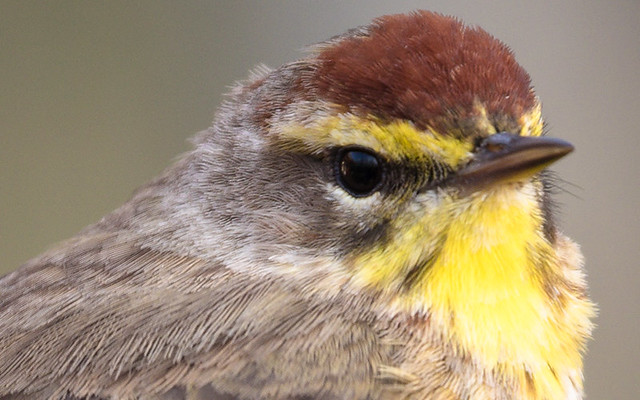
Tennessee Warbler
Oreothlypis peregrina


5 POINTS
• Oreothlypis peregrina has a FLIGHT of 2.
• Despite its common name, Oreothlypis peregrina neither breeds nor over-winters in the state of Tennessee.
Cool, WarmImage by Jacqueline Rae jacquelinerae.deviantart.com/Jerry Oldenettel www.flickr.com/photos/7457894@N04The Tennessee Warbler, Oreothlypis peregrina, is a New World warbler. It breeds in northern North America across Canada and the northern USA. It ismigratory, wintering in southern Central America and northern Colombia and Venezuela, with a few stragglers going as far south as Ecuador. It is a very rare vagrant to western Europe. This bird was named from a specimen collected in Tennessee where it may appear [...]
read more -
Horned Puffin
Fratercula corniculata
Sorry, there is no photo available. If you have one, please submit here.7 POINTS
• Fratercula corniculata has a FLIGHT of 2.
• Fratercula corniculata nest in bluffs of fractured rock or crevices in cliff faces near the shoreline.
Cold, CoolImage by latyshoffa latyshoffa.deviantart.com/The Horned Puffin (Fratercula corniculata) is an auk, similar in appearance to the Atlantic Puffin; this bird’s bill is yellow at the base and red at the tip. It is a pelagic seabird that feeds primarily by diving for fish. It nests in colonies, often with other auks. The yellow bill plate grows before the breeding season and is shed [...]
read more -
Mountain Kingfisher
Syma megarhyncha
Sorry, there is no photo available. If you have one, please submit here.7 POINTS
• Syma megarhyncha has a MOVE of 2.
• Syma megarhyncha is found in Papua New Guinea and Indonesia.
Cool, Warm, HotImage by turtle-rn turtle-rn.deviantart.com/The Mountain Kingfisher (Syma megarhyncha) is a species of bird in the Alcedinidae family. It is found in Indonesia and Papua New Guinea. Its natural habitats are subtropical or tropical moist lowland forests and subtropical or tropical moist mountains. All kingfishers are short-tailed large-headed compact birds with long pointed bills. Like other Coraciiformes, they are [...]
read more -
Blue-headed Pitta
Pitta baudii
Sorry, there is no photo available. If you have one, please submit here.8 POINTS
• Pitta baudii has a FLIGHT of 2.
• Pitta baudii can smash open snail shells by banging them upon tree roots and rocks.
Warm, HotImage by turtle-rn turtle-rn.deviantart.com/The Blue-headed Pitta, Pitta baudii, is a species of bird in the pitta family Pittidae. The species is endemic to the island of Borneo, where it occurs inBrunei, Kalimantan (Indonesia), Sarawak and Sabah (Malaysia). Its natural habitat is tropical lowland evergreen forests. While it does occur in disturbed of secondary forests, it is most common in primary forest. It usually occurs below 600 m (2,000 ft), it has been [...]
read more -
Northern Mockingbird
Mimus polyglottos
Sorry, there is no photo available. If you have one, please submit here.3 POINTS
• Mimus polyglottos has a FLIGHT of 2.
• Mimus polyglottos is one of the loudest and most vocal of all birds.
Cool, WarmImage by Jacqueline Rae jacquelinerae.deviantart.com/The Northern Mockingbird, Mimus polyglottos, is the only mockingbird commonly found in North America. This species was first described by Linnaeus in his Systema naturae in 1758 as Turdus polyglottos.[2] The Northern Mockingbird breeds in southeastern Canada, the United States, northern Mexico, the Bahamas, the Cayman Islands and the Greater Antilles. It is replaced further south by its closest living relative, the Tropical Mockingbird. The Socorro Mockingbird, an endangered species, is [...]
read more
QUICK CARD LINKS: Event | Mammal | Plant | Bird | Cephalopod | Reptile | Fish | Insect | Spider | Fungi | Microbe | Starters | Habitat
CARD ATTRIBUTES DESCRIPTION
Top Left: COMMON NAME, LATIN NAME
Top Right: SCALE#, FOODCHAIN#, DIET (photosynthetic | molecular carbon | herbivore | omnivore | carnivore)
Middle: CLASSIFICATION (Kingdom, Phyla/Division, Class)
Middle Text: (currently blank) SPECIAL ABILITIES
Bottom Graphic: TERRAIN (desert | freshwater | forest | grassland | ocean | tundra | urban)
Bottom Left: ARTIST NAME, ARTIST URL
Bottom Right: CLIMATE (cold | cool | warm | hot)
LEAVE A COMMENT ON A CARD!
Click on the Permalink and post a related link worth checking out, or better yet, tell us a story about the creature. Also, do leave a comment if you have suggestions for text (data) on the card.
Wordpress Phylomon Theme 0.5 by OLT UBC (Attribution-Noncommercial-Share Alike 3.0 Creative Commons License)
(p.s. If you're looking for the DNA alignment game, click here)